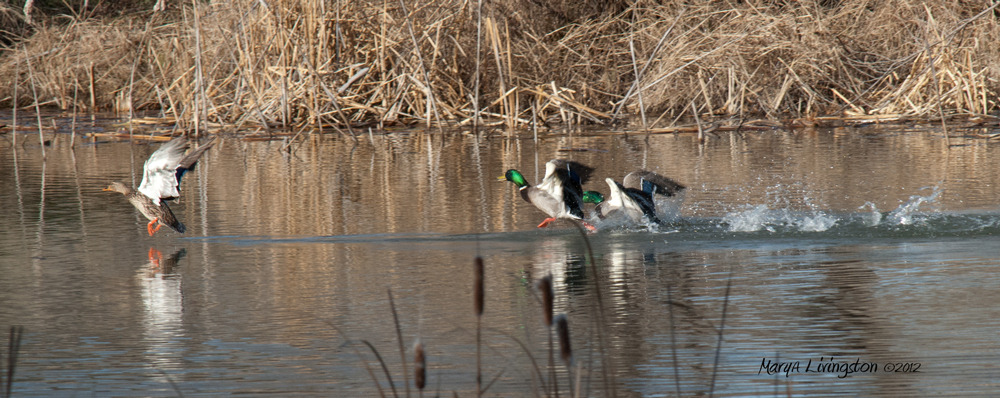
With all of this wildlife out my backdoor, it is a wonder I get anything done!
With all of this wildlife out my backdoor, it is a wonder I get anything done!

A close view of the cute little fellas. Can you believe how adorable they are?

A wider shot. These babies will not be able to leave the nest until they can climb the 14 feet to the entrance of the hollow cavity.

Deep in the nest cavity, the little white fluff under the breast of the parent is a new turkey vulture chick.
What a treat today! I caught video of the parent turkey vultures during their shift change. We don’t have sound from the nest, yet. We are working on getting the sound up.

During the day we cannot see into the nest from the camera. At night, we can see deep inside with night vision. Fourteen feet to the bottom.

Est. hatch date range: sometime April 15-17. Empty shell pieces indicates hatched chicks.
Happy Hatching!!
Est. hatch date range: sometime April 15-17. Empty shell pieces indicates hatched chicks. the parent is hovering over chick(s). Sorry no images of the chicks, just the empty shells for now. But here is something for you –
Save 15% on No Place for UGLY Birds!
Edit your cart with discount code: 15hatch
Happy Hatching discount code good through 4-22-13.

No Place for UGLY Birds
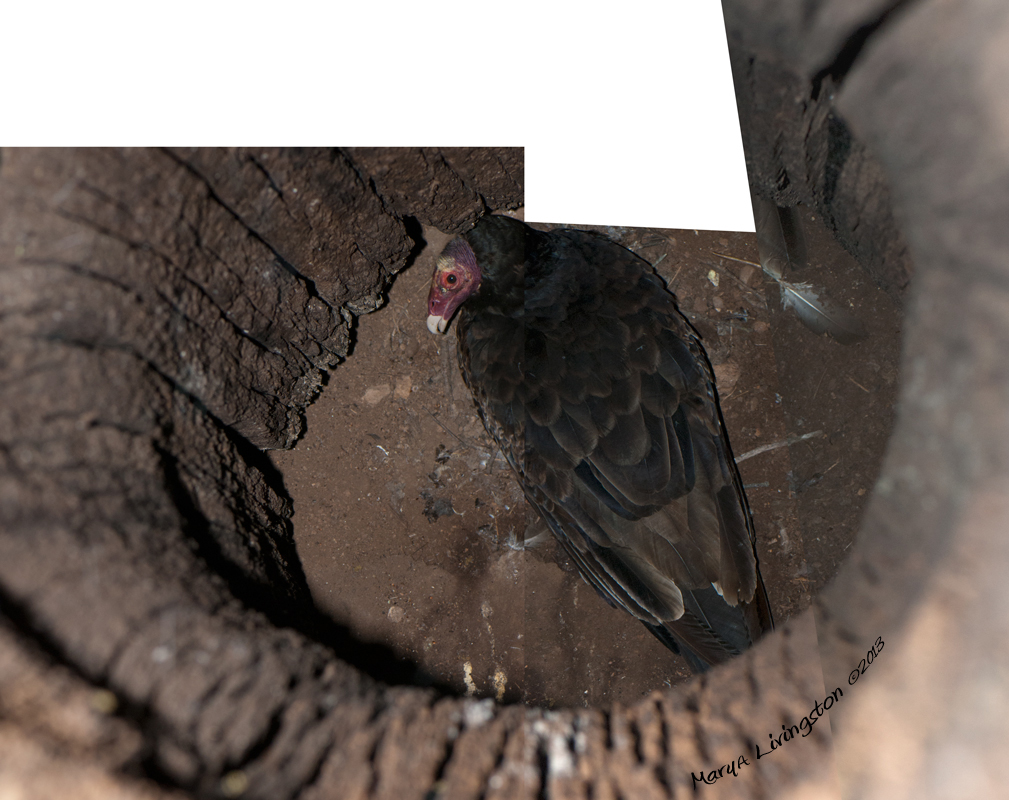
Brooding turkey vulture in a 14 ft. hollow of a blue oak tree. This image is a composite of 3 photos.
Peering down the vulture hole, I am amazed at the ability of the turkey vultures to climb in and out of this nesting location. It is fourteen feet from the opening to the base.
It is unclear whether this brooding vulture is on eggs or new chicks. It should be nearing time for the eggs to hatch, if my calculations are correct. On March 5th & 6th , I recorded the pair breeding at the entrance and the female retreating inside the nesting cavity. I am making an educated guess that this was around the time of laying their eggs. Most sources site 34-40 days incubation. Sources are vague on the day count, but in all fairness who counts days for vultures hatching? The UStream Missouri turkey vultures incubated for 34 days in 2012.
Both parents incubate the eggs and share in raising the chicks. I do not know when incubation began for this pair.
So for now, all I know is…
Tukey-vultures Are Residing Down Inside Shelter.
TARDIS…bigger in the inside. 😉
There is no greater bliss than live one’s purpose.
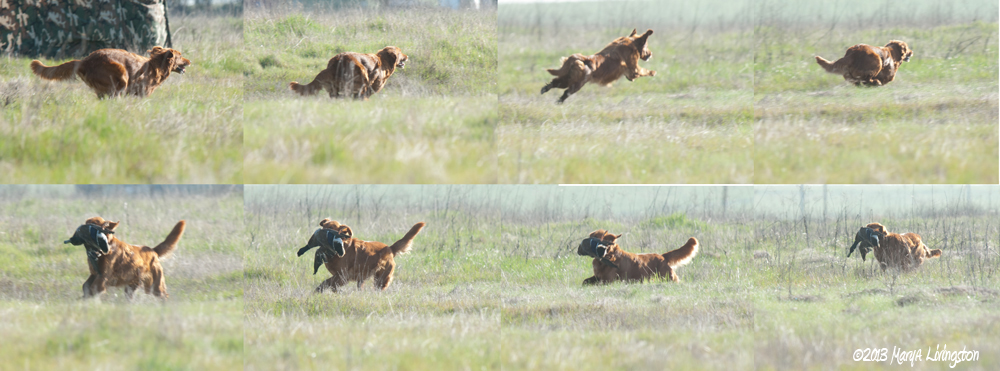
Blitz displays style, drive, steadiness and pinpoint accuracy to start the day.
Our retrievers are working retrievers. They are descendants of generations of canine companions that hunt with their human counterparts. When harvesting upland game or waterfowl, a working retriever is essential. Often, game lands in an area inaccessible to the human hunter. Enter the well-trained retriever to recover dinner.
The ultimate test for a working retriever is to work in a real time hunt and retrieve dinner for its family. There is a process to test these working dogs to a standard established to determine their readiness as a hunting companion.
In these tests, the retriever’s natural abilities and trained abilities are judged.
Natural abilities: marking and memory, intelligence, attention, nose, courage, perseverance and style.
Trained abilities: steadiness, control, response to direction, and delivery.
Here are some snapshots of Tim, The Forester Artist, with the girls yesterday. It was a very difficult test. Twenty-eight dogs entered, twenty-one competed, only eight qualified.
Congratulations to Blitz on her first Senior Hunter qualifier.

Blitz, a working golden retriever, shows nice style on her water retrieves.

Blind retrieve: the retriever does not know where the bird is. The handler must guide the retriever with whistle and voice command.

Teka shows speed and style on her blind.

Teka completes her land series.
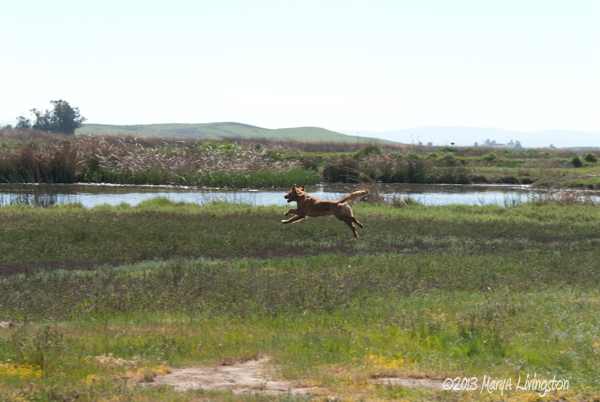
Teka is fast, that is because she spends more time in the air than most dogs.

Teka on the return with her first water mark.

Teka greets Kathleen, one of her people who came to watch her at the event. Teka properly loved up both Doug and Kathleen.
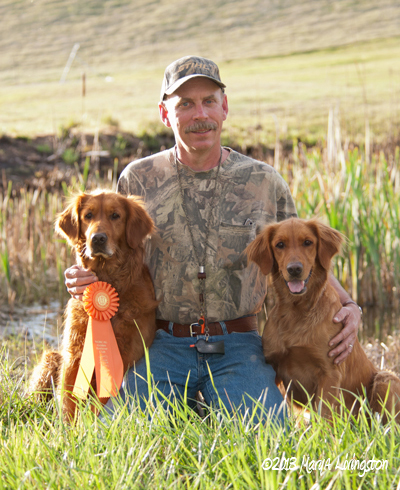
Tim, The Forester Artist, with Blitz and Teka.

Strutting his stuff for his lady. Spring is in full swing in my backyard.

A pair of turkey vultures at the threshold of the nest cavity.
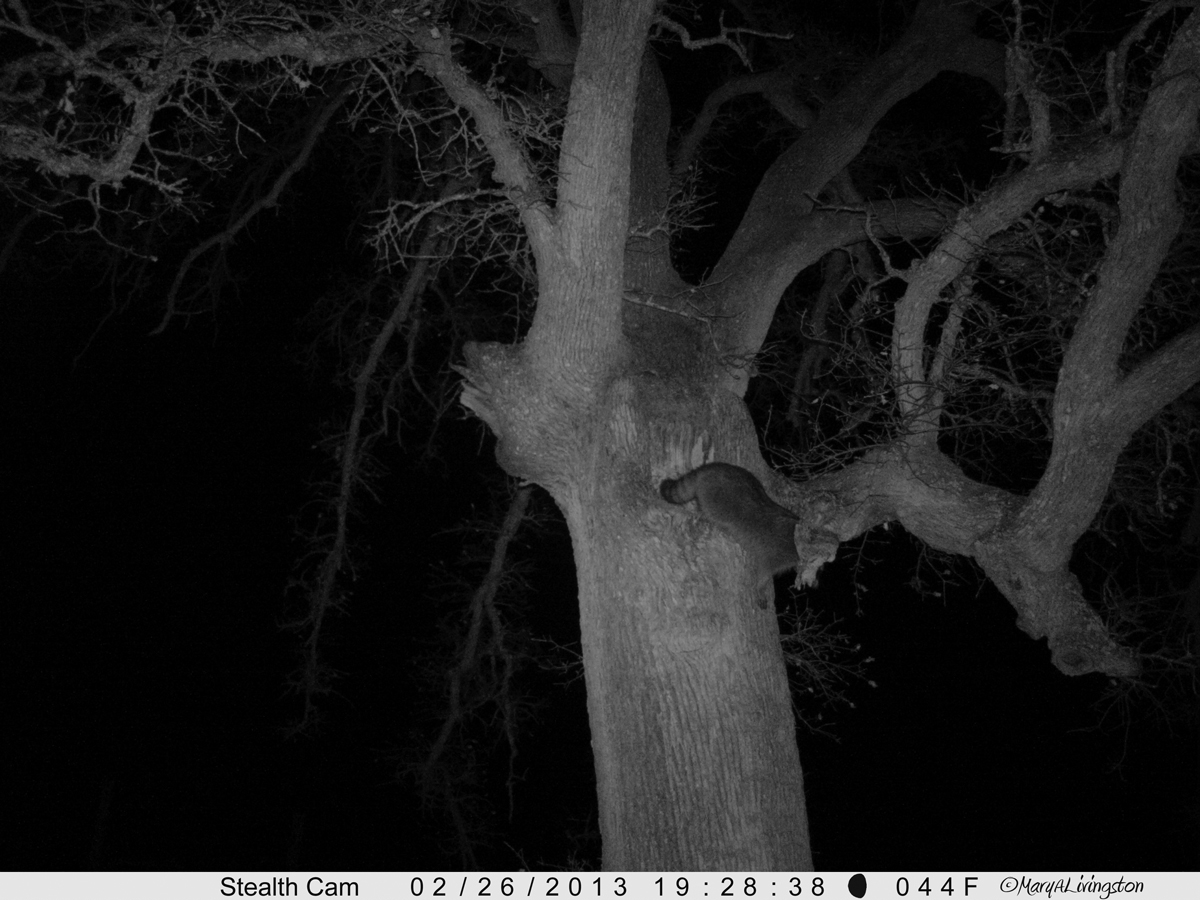
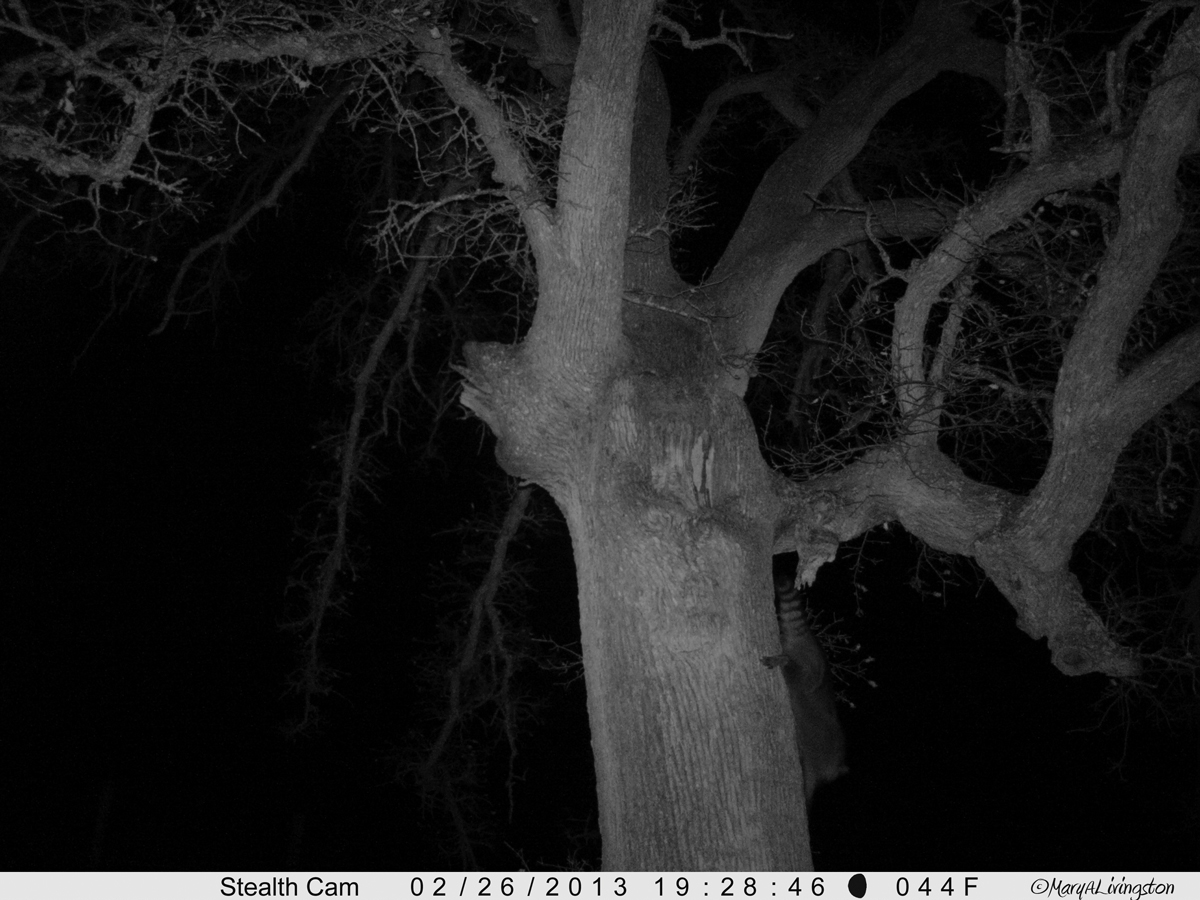
Early in the night, just after dark, a raccoon visited the turkey vulture nest tree. It climbed up the backside and over the top. Paused a moment at the cavity opening, then was on its way. I worried when I first saw the intruder, a nest raider for sure. I wondered if the vulture eggs would be safe down inside the tree cavity? Will this night bandit be back?




 Related Posts
Turkey Vulture Rendezvous
Spying on the Vulture Nest
Vulture Turf Wars
They’re Back
Wings of Autumn
I am uncertain as to how well this will work. Today Tim and I set up a camera to watch the turkey vulture nest. Since they have already returned to the nest, we set it up at a distance. Hopefully, we can catch them coming and going at the entrance.
The nesting spot is located deep in the cavity of a hollow tree. We measured last summer and it is 14 feet down. We have no way to set up a camera inside of the nest cavity short of drilling a hole in the tree trunk.
After some time, I may mount a camera on a pole and raise it to the top of the nest to attempt to sneak a few shots of the inside; but for now, we will keep it at a non-disturbing distance. So far, no images to share from the nest cam itself…I will keep you posted.

Tim and I head out to set up the vulture cam.
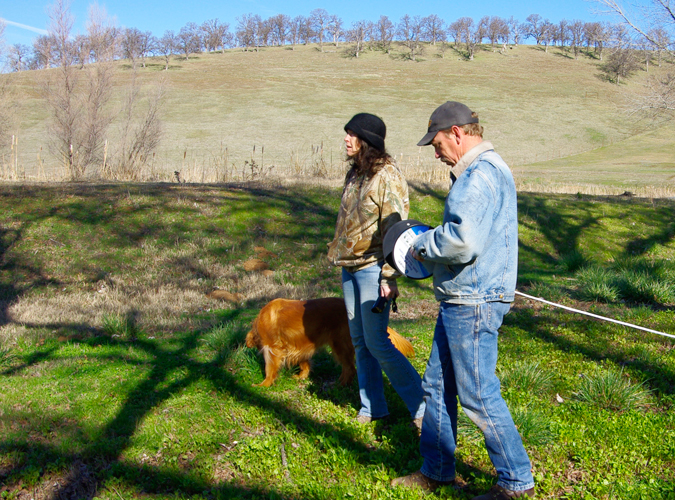
We figured we were close enough. Photos by my niece, Paige Donahue.

Just a few tweaks to the camera angle. Photos by my niece, Paige Donahue

A few final tweaks to secure the camera. Thanks Paige for taking the pictures!
 Sneaking Bliss